In pediatric surgery and urology, non-invasive diagnostic tools are a long-awaited necessity. Enter the liquid biopsy—a revolutionary technique that analyzes biomarkers like circulating tumor DNA (ctDNA), RNA, proteins, or exosomes from bodily fluids such as blood or urine. What was once science fiction is now reshaping how we detect, monitor, and manage surgical conditions in children.
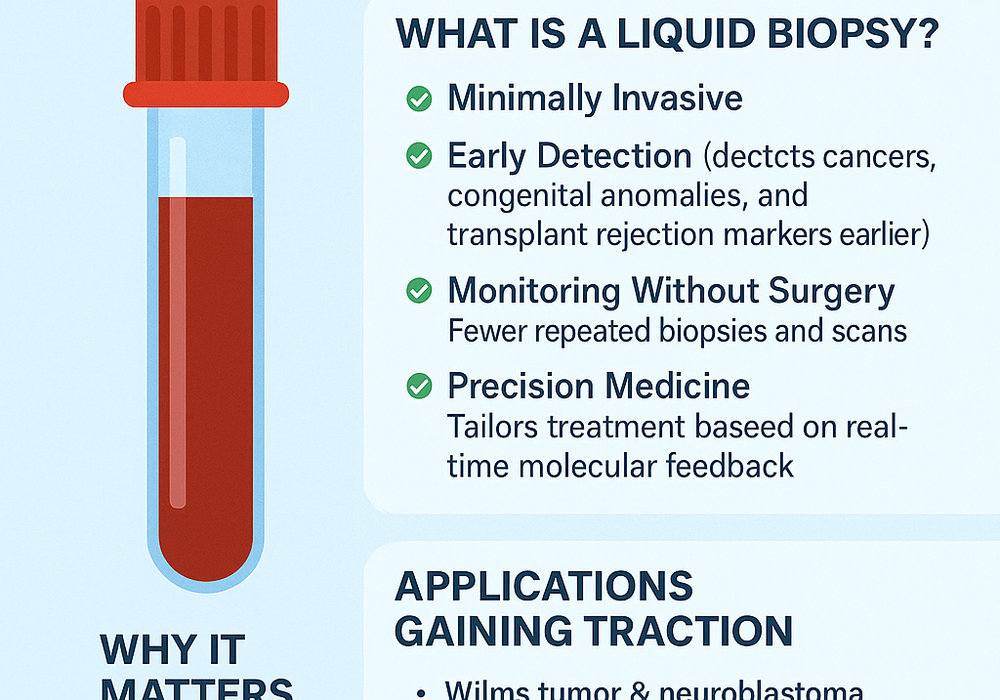
What Is a Liquid Biopsy?
Liquid biopsy involves sampling a patient’s blood or urine to detect genetic and molecular signs of disease—without the need for a scalpel. For children, who may have small tumors or difficulty undergoing repeated imaging or invasive procedures, this approach is groundbreaking.
Why It Matters in Pediatrics:
- Minimally Invasive: Reduces trauma and risk, especially in neonates and toddlers
- Early Detection: Detects cancers, congenital anomalies, and transplant rejection markers earlier
- Monitoring Without Surgery: Fewer repeated biopsies and scans
- Precision Medicine: Tailors treatment based on real-time molecular feedback
Applications Gaining Traction:
- Wilms tumor & neuroblastoma surveillance
- Urothelial tumors in children
- Postoperative recurrence monitoring
- Transplant rejection detection (e.g., renal grafts)
- Bladder exosome-based diagnostics for voiding dysfunction
The Road Ahead:
While still in early stages in pediatric populations, trials are underway to validate liquid biopsy use in:
- Pediatric oncology protocols
- Pediatric kidney transplant follow-up
- Congenital anomaly surveillance (e.g., posterior urethral valves)
Final Word:
Liquid biopsies could redefine how pediatric surgeons and urologists practice. With real-time insights from just a drop of fluid, we move closer to gentler, faster, and more accurate care for our youngest patients.