The concept of mail delivery has always pushed the boundaries of what can be sent. From live animals (briefly) to perishables packed in ice, the early 20th century saw a surge in experimentation with what could be entrusted to the postal system. However, one peculiar trend stands out: the attempted mailing of children.
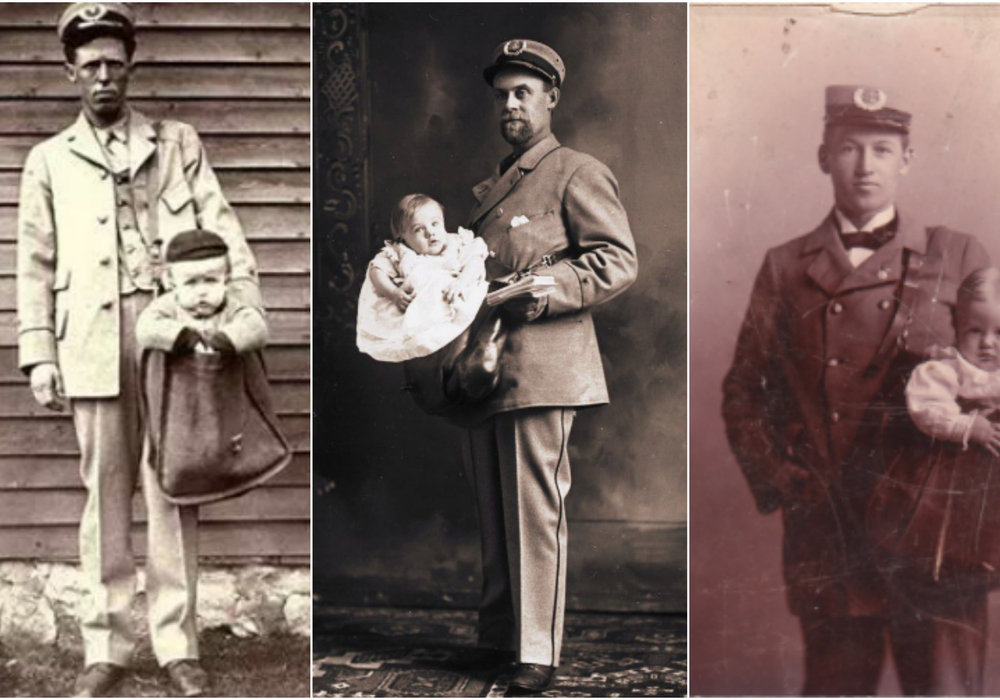
Believe it or not, in the early 1920s, there were documented cases of parents or guardians trying to send children through the mail. While the reasons varied, it stemmed from a combination of factors:
- The Rise of Parcel Post: The introduction of Parcel Post in 1913 allowed for packages exceeding four pounds to be mailed for a relatively low cost. This seemingly innocuous development sparked a period of creative (and sometimes dangerous) uses for the service.
- Misunderstanding of Regulations: Early parcel post regulations were relatively lax, leading some to believe children could be classified as a special type of package. There were even instances of parents inquiring about shipping costs for their children!
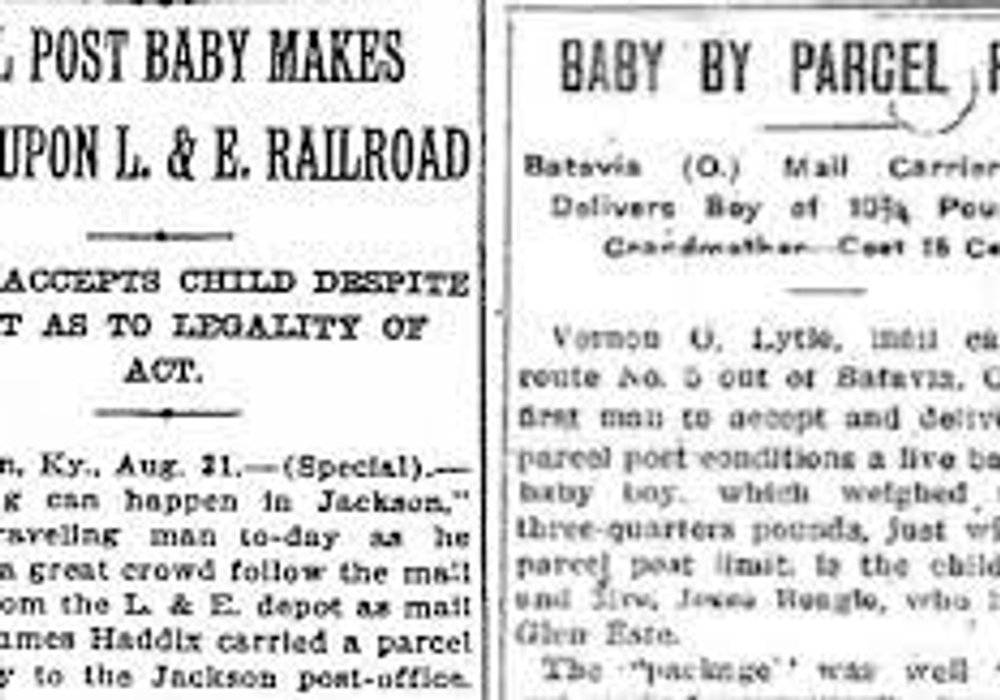
- Economic Hardship: The period after World War I was marked by economic hardship for many families. Desperate parents might have seen mailing a child to relatives as a way to ease the financial burden of raising them.
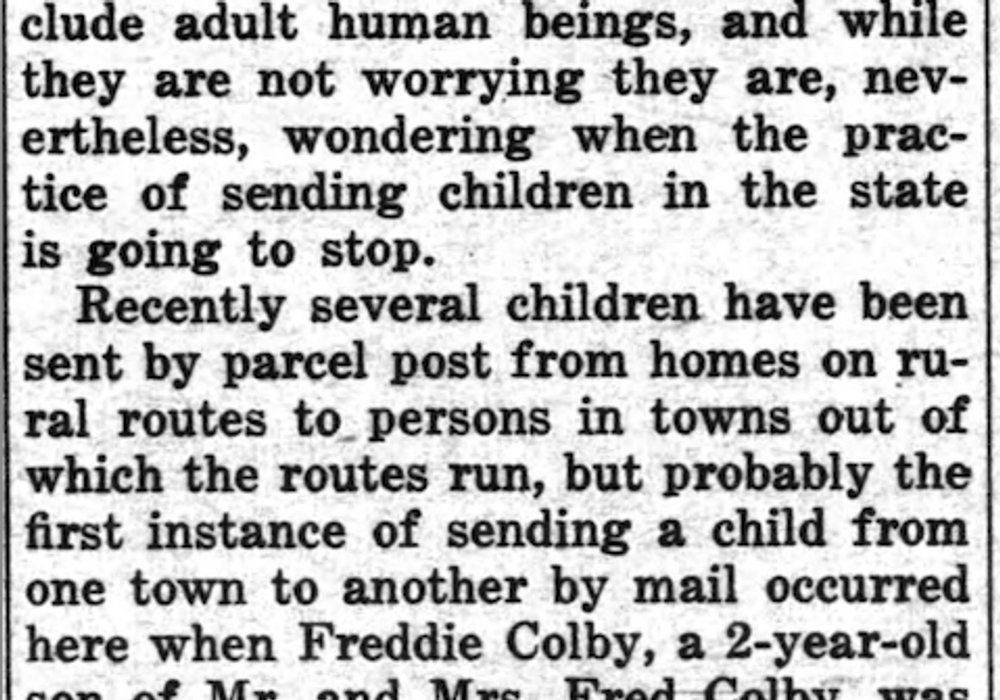
- Lack of Awareness of Child Welfare: Child welfare laws and social safety nets were not as well-developed in the early 20th century. Some parents might have viewed mailing a child as a viable, albeit unorthodox, solution to temporary difficulties.
The End of an Unconventional Practice:
Thankfully, this practice was short-lived. Thankfully, common sense and postal regulations intervened:
- Safety Concerns: The sheer impracticality and danger of mailing a child were quickly evident. Imagine the physical and emotional trauma a child would endure during such a journey!
- Public Outcry: Newspapers and the public reacted with outrage at the idea of mailing children. This social pressure helped deter further attempts.
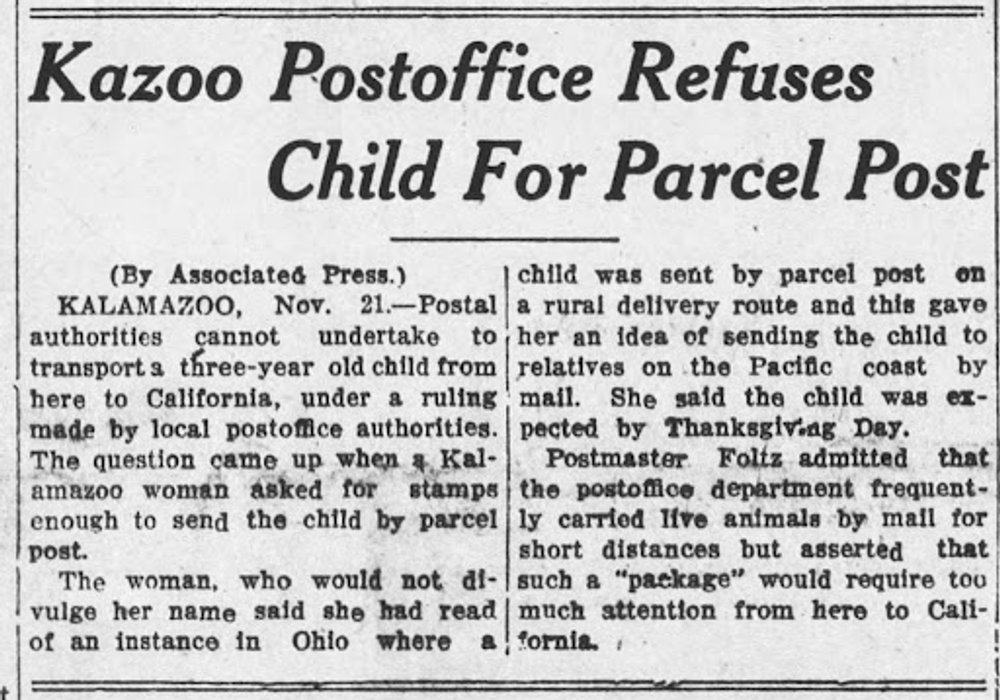
- Postal Service Intervention: By 1920, the US Postal Service had clarified its regulations, explicitly prohibiting the mailing of humans. The Assistant Postmaster General famously declared that children could not be classified as "harmless live animals."
Legacy of a Strange Practice:
While the practice of mailing children is a bizarre footnote in postal history, it serves as a reminder of the evolving nature of childhood, social safety nets, and the postal service itself. It highlights the importance of clear regulations and societal norms to protect vulnerable populations.
Though the story might bring a chuckle, it also serves as a reminder of the lengths some parents might go to in desperate circumstances. Thankfully, child welfare systems and social support structures have evolved to hopefully prevent such situations from arising today.
Further Exploration:
If you're interested in learning more about this unusual piece of history, you can explore these resources:
- Smithsonian Magazine: https://www.si.edu/newsdesk/snapshot/special-delivery
- National Postal Museum: https://www.usatoday.com/story/news/factcheck/2022/07/13/fact-check-sending-people-through-mail-barred-1914/7453093001/
- Newspaper archives from the early 1920s might offer local perspectives on this phenomenon.