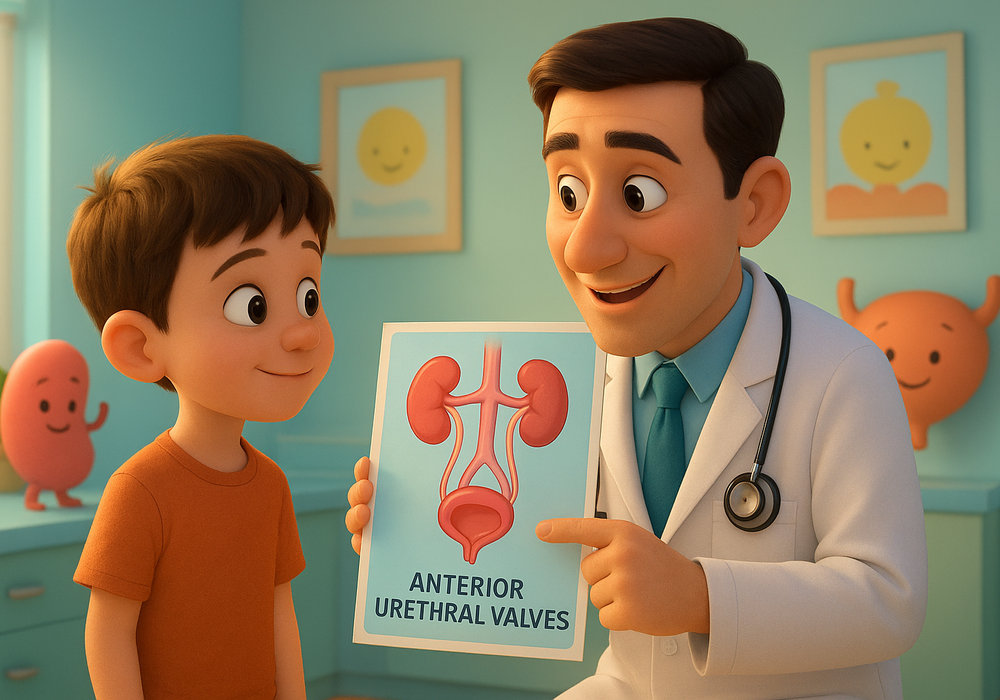
When most paediatric urologists talk about urethral valves, the spotlight falls on posterior urethral valves (PUV) — a well-known cause of bladder outflow obstruction in boys. But lurking quietly in the shadows is a lesser-known condition: Anterior Urethral Valves (AUV).
What Are Anterior Urethral Valves?
Anterior urethral valves are thin leaf-like folds of tissue in the anterior urethra (usually bulbar or penile urethra) that obstruct urinary flow. Unlike PUV, they are rare, with incidence estimates at 1 in 50,000–125,000 live births, and often missed in early assessments.
How Do They Present?
Symptoms may be subtle and progress slowly, leading to delayed diagnosis:
- Weak urinary stream
- Dribbling or spraying of urine
- Recurrent urinary tract infections
- Palpable swelling along the penile shaft during voiding (due to urethral diverticulum)
- In severe cases: poor bladder emptying and upper tract dilatation
Why They’re Often Overlooked
- Mild obstruction in early stages
- Overlap with other voiding dysfunction symptoms
- Lack of awareness in primary care settings
- Imaging may not clearly reveal the obstruction unless performed with proper technique
How Are They Diagnosed?
- Voiding cystourethrogram (VCUG): shows a distal urethral obstruction with ballooning of the urethra proximal to the valve
- Cystourethroscopy: definitive diagnosis and allows treatment at the same time
Management
Endoscopic valve ablation or resection is the gold standard. Prognosis is generally good if diagnosed early, but long-standing obstruction can lead to bladder dysfunction and renal compromise.
Why This Matters
Raising awareness about AUV can prevent delayed diagnoses, unnecessary suffering, and irreversible kidney damage. Every paediatrician, general practitioner, and urologist should keep AUV in mind when faced with unexplained urinary symptoms in boys.
Final Thought
Sometimes, the most dangerous problems are the quietest ones. Awareness is our first surgical tool.