How we tackle the drips and dribbles that can dampen the spirits of our little adventurers.
Urinary Incontinence
Enuresis
Bedwetting, medically referred to as enuresis, is a common problem that many children face. Despite the high prevalence of enuresis, it is often a source of significant stress and embarrassment for both the child and the parents. Therefore, understanding the causes, types, and treatments of enuresis can be beneficial in managing this condition effectively.
Enuresis is typically characterized by involuntary urination during sleep, predominantly occurring at night (nocturnal enuresis) in children over the age of five. This age is significant because by this time, most children have achieved urinary continence, and any persistent bedwetting may be indicative of an underlying issue. Upto 5 years of age enuresis is considered physiological. Children develop stable bladder control in the 3rd to 6th year of life—initially during the day and later also during the night. At age 7, 10% still have nocturnal enuresis, 2% to 9% are affected during the day. The spontaneous remission rate is about 15% per year. Only a third of those affected seek out healthcare services, which provides a clear indication of how the symptoms are rated very differently in different families
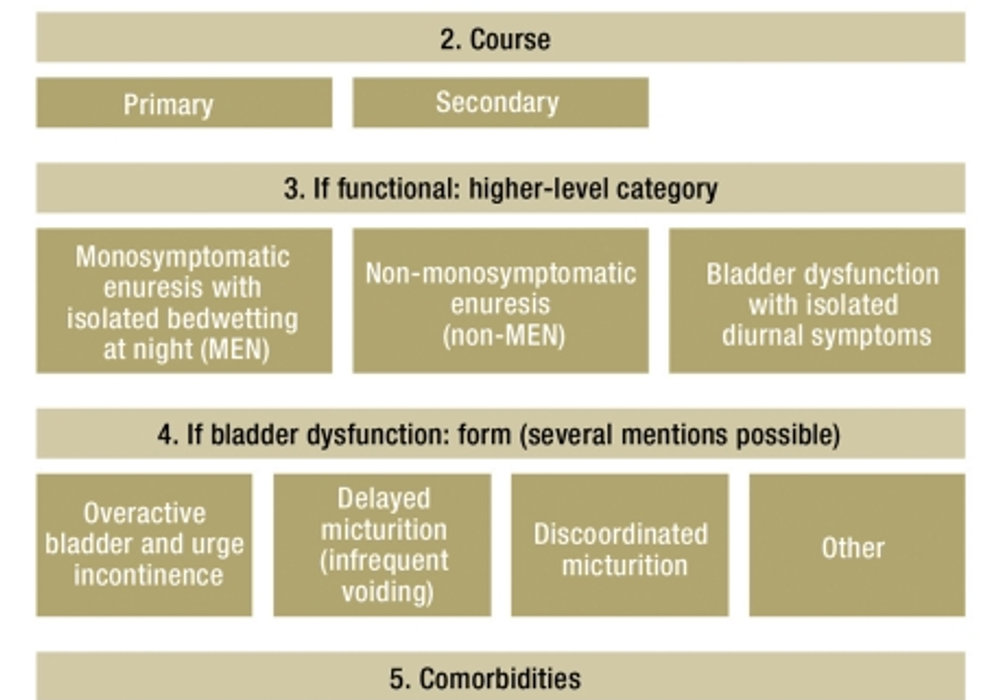
The exact causes of enuresis are multifactorial and can be broadly divided into two categories: organic and functional. Organic causes refer to physical abnormalities such as urinary tract infections, diabetes, or anatomical abnormalities. In contrast, functional causes are related to the child's behavior, psychological factors, or delayed maturation of the nervous system controlling bladder function.
Enuresis can also be classified into two types: primary and secondary. Primary enuresis refers to children who have never achieved consistent night-time dryness for a period of six consecutive months. This type is often associated with a delay in the maturation of the mechanisms controlling bladder function. Secondary enuresis, on the other hand, refers to children who have been dry at night for at least six consecutive months and then start bedwetting again. This type is often linked to stressful events, urinary tract infections, or other medical conditions.
The impact of enuresis on a child's self-esteem and social interactions cannot be overstated. It can lead to feelings of shame, guilt, and a perceived loss of control. Moreover, it can also result in social isolation as the child may avoid sleepovers or school trips for fear of embarrassment. Up to 40% of children with urinary incontinence present with clinically relevant behavioral disorders (for example, social behavior disorders, ADHD, anxieties, depressive disorders). These can arise subsequent to wetting and may persist. However, they can also precede the enuresis (for example, secondary enuresis after a change of school, parental divorce, moving house). Therefore, it is essential to approach this condition with sensitivity and understanding.
Diagnostic evaluation in urinary incontinence in children
Basic diagnostics
- Detailed medical history (standardized questionnaire, consultation)
- Bladder diary (diary detailing fluid intake and micturition for 48 h) and 14-day excretion diary
- Physical examination (urological and orientational neurological examination)
- Urinalysis
Further diagnostics
- Sonography (if medical history clearly identifies MEN this is not required):
- Residual urine (normal: 0–5 mL, threshold value: 6–20 mL, pathological: > 20 mL)
- Bladder wall thickness (>3–5 mm in >50% bladder fullness)
- Kidneys (wide pelvicocaliceal system, duplex kidneys, reduced renal parenchyma)
- Rectal diameter (>30–40 mm)
- Observed micturition
- Uroflowmetry/flow-electromyography (EMG)
Special diagnostics
- In organic urinary incontinence
- In functional urinary incontinence with risk to the kidneys
- In comorbidities
Important questions to ask during history taking
- When does your child wet itself: only at night or also during the day time?
- How often does this occur (for example, every night or several times every month)?
- Where does it occur (only at home, only outside the home)?
- How often does your child go to the toilet every day; does he/she have to get up at night?
- Do your child’s underpants have yellow staining during the day?
- Have you observed so-called holding maneuvers?
- How does your child urinate?
- Is the urine stream intermittent; does your child have to strain or squeeze?
- Has your child had urinary tract infections in the past (febrile/afebrile)?
- Does your child suffer from constipation, soiling, encopresis?
- What are your child’s drinking habits (how much, what, when)?
- Does your child drink large volumes of fluids, especially in the evening?
- Have you observed signs of a general developmental delay?
- Have you observed psychological or behavioral abnormalities?
- Does your child have comorbidities or has he/she had surgery?
- What has already been done to treat the child’s urinary incontinence?
- Does your child encounter stressful situations within the family or at school?
The management of enuresis involves a combination of behavioral modifications, medication, and sometimes, the use of bedwetting alarms. Behavioral modifications include strategies such as encouraging regular toilet trips, avoiding caffeine-based drinks, and ensuring that the child is not constipated. Medications like Desmopressin can be used to reduce urine production at night, and anticholinergic drugs can help increase bladder capacity. Bedwetting alarms are devices that wake the child as soon as they start to wet the bed, thus promoting a conditioned response over time.
Symptoms/comorbidities that may necessitate referral to/co-treatment from other specialties:
- Fecal incontinence and/or constipation: pediatric gastroenterology
- Urinary tract infection, polyuria, polydipsia: pediatric nephrology/pediatric urology
- internalizing/externalizing disorders: child and adolescent psychiatry
- Midline defects (esp. “tethered cord“), developmental disorders: neuropediatrics
- Sleep apnea syndrome: pediatric pneumology
- Continual urinary incontinence, neurogenic bladder, other forms of organic urinary incontinence: pediatric urology, pediatric surgery
Pharmacological and non-pharmacological interventions in urinary incontinence in children, with evidence levels
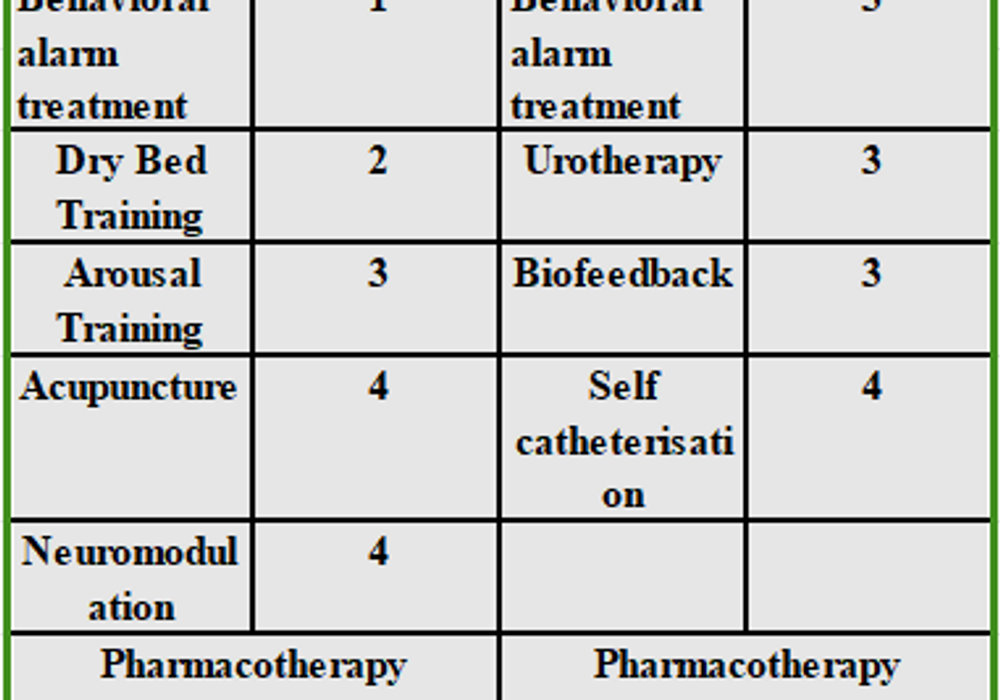
Urotherapy
The term urotherapy is used for all non-surgical and non-pharmacological treatment modalities in urinary incontinence.
Elements of standard urotherapy
- Information and “demystification“: physiology, maturation, pathophysiology, therapeutic approaches, comorbidities
- Micturition behavior: for example, toileting schedules, micturition schedules, micturition by the clock
- Drinking behavior and nutrition: for example, drinking schedules,“7-glass rule,“ diet in case of constipation
- Documentation of the course: diary systems, serial non-invasive investigations (for example, measuring residual urine, uroflowmetry)
- Support and help: regular contact, keeping a success diary, availability of the therapeutic team, motivation
Specific interventions (selection)
- Behavioral modification
- Anti-stress program
- Alarm systems (behavioral alarm treatement)
- Physiotherapy
- Pelvic floor exercises
- Biofeedback training, electrostimulation
- Self-catheterization
However, the cornerstone of managing enuresis is patience and reassurance. It is essential to reassure the child that bedwetting is a common issue that many children face and that it is not their fault. The role of parents in creating a supportive and non-punitive environment is crucial in helping the child overcome enuresis.
In conclusion, enuresis is a common pediatric urological problem with multifactorial causes. It can have significant psychological implications for the child, necessitating a sensitive and empathetic approach. With time, patience, and the right strategies, most children will eventually achieve night-time dryness.
Impact on Quality of Life
The issue of quality of life is fundamental when considering the implications of bedwetting and urinary incontinence. It is not just about the physical implications of these conditions, but also the psychological, social, and overall well-being of the child and their families.
Children with these issues often endure physical discomfort and pain, frequent medical appointments and procedures, medication regimens, and in some cases, surgical interventions. These factors can significantly impact their everyday activities, including school attendance and participation in social events. The physical limitations imposed by their condition can lead to feelings of difference, isolation and even stigmatization among their peers.
Moreover, the psychological impact of paediatric urological conditions should not be underestimated. Children may experience fear and anxiety related to their condition and its treatment. They may also struggle with feelings of embarrassment or shame, particularly as they grow older and become more aware of their bodies and bodily functions. This can impact their self-esteem and emotional development, and may even lead to social withdrawal or behavioural issues.
The impact on the family unit is also considerable. Parents or caregivers may experience high levels of stress and anxiety related to their child's condition, its management, and the potential long-term implications. This can strain family relationships and dynamics, and may also have financial implications due to medical costs and potential loss of income if parents need to reduce work hours or quit jobs to care for their child.
However, there is also a potential positive side to consider. Overcoming the challenges associated with a urological condition can foster resilience and coping skills in children and their families. It can also lead to increased empathy and understanding, as children may become more aware of the struggles of others and families may become more cohesive in their shared experience.
Effective management of such paediatric urological conditions, therefore, goes beyond medical treatment. It requires a holistic approach that addresses the physical, psychological, and social impacts of these conditions. This includes providing appropriate pain management, psychological support for the child and their family, and assistance with navigating social and educational challenges. Early intervention and ongoing support can help to mitigate the impact on quality of life and ensure the best possible outcomes for these children.